
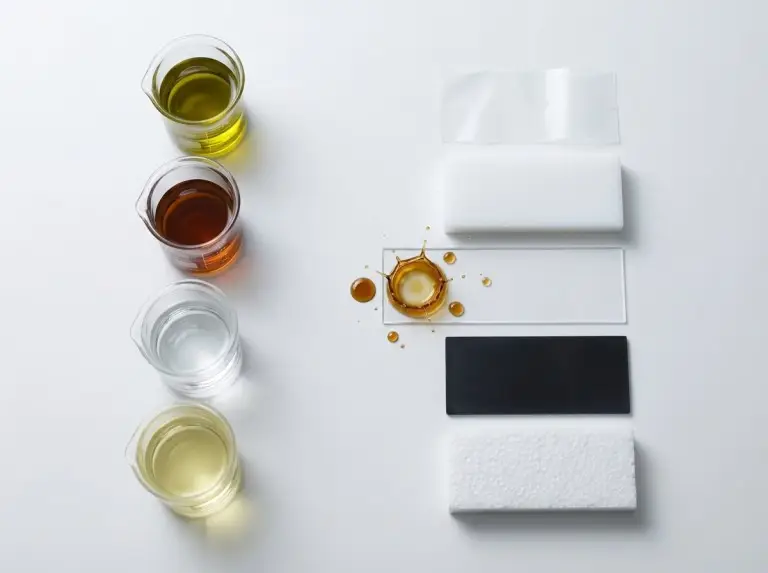
Oil does not melt most plastics under normal conditions. However, it can soften, degrade, or dissolve certain plastics. The outcome depends on the oil type, the polymer, the temperature, and how long they stay in contact. The answer is never a simple yes or no. Oil and plastic interact through two separate mechanisms — thermal effects and chemical compatibility — and confusing the two leads to poor material choices.
This article covers the thermal and chemical pathways through which oils affect plastics. It identifies which oil-plastic combinations pose real risk and explains how to choose the right plastic for oil contact. It does not cover pyrolysis, depolymerization, or waste-to-fuel conversion, which involve different equipment and process conditions.
Why the Answer Depends on More Than One Variable
Whether oil melts plastic depends on three variables working together: the melting range of the specific polymer, the temperature the oil reaches, and the chemical compatibility between the oil and the polymer. Looking at only one of these variables leads to wrong conclusions.
Thermal melting is a physical phase change. A thermoplastic melts when heat disrupts its molecular structure enough for the polymer chains to flow. Each polymer has its own melting range, regardless of the heat source. Boiling water tops out at 100°C, which cannot melt polypropylene (melting range 160–170°C). Hot cooking oil at 200°C or above easily reaches that threshold. In this case, the oil is not chemically attacking the plastic. It is simply transferring heat at a temperature water cannot reach.
Chemical degradation works differently. It does not require high temperatures at all. Certain oils act as solvents or stress-cracking agents on specific plastics, even at room temperature. Essential oils with terpenes can dissolve polystyrene containers within minutes. Motor oil can make certain polyethylene types brittle over months. These effects come from molecular interaction, not heat.
Knowing which mechanism is at work changes the fix. If the problem is thermal, choose a plastic with a higher softening point. If the problem is chemical, choose a polymer that resists that specific oil — regardless of temperature.
Thermal Melting Ranges of Common Plastics Compared to Oil Temperatures
Different plastics begin to soften or melt at very different temperatures. Comparing those thresholds to typical oil temperatures shows when thermal melting is a real risk.
Low-density polyethylene (LDPE) softens at around 105–115°C. Standard cooking oils reach 160–230°C during frying, well above that threshold. This is why LDPE film or wrap deforms or melts in hot cooking oil. The oil is not dissolving the plastic. It is heating it past its softening point.
Polypropylene (PP) melts at 160–170°C. Refined canola or peanut oil can exceed 200°C, pushing PP past its thermal limit with sustained contact. A PP utensil that briefly touches warm oil may survive. Prolonged immersion at frying temperature will cause visible deformation.
Polyethylene terephthalate (PET) melts at a higher range, around 250–260°C. This exceeds the smoke point of most cooking oils, so PET containers are thermally safe around food-grade oils in normal use. One caveat: PET’s glass transition temperature sits much lower, around 70–80°C. At that point, it starts to lose rigidity, even though it has not truly melted.
Nylon (PA6/PA66) melts between 220–260°C. Polycarbonate (PC) softens around 150°C but lacks a sharp melting point because of its amorphous structure. Each polymer responds differently. No single statement about “plastic” and “oil” applies to all materials. Both the polymer and the oil temperature must be identified before making any prediction.
Chemical Effects of Different Oil Types on Plastic
Chemical compatibility between oil and plastic determines whether degradation happens without any thermal melting. Different oil categories carry different risk levels, and those risks are often underestimated. Below is how each major oil type interacts with common plastics:
- Cooking oils (olive, canola, sunflower): Mild toward most plastics. PE and PP containers store these oils safely under normal conditions. Prolonged storage in warm environments or sunlight can cause hazing, softening, or discoloration in lower-grade polyethylene. The degradation is slow but cumulative, and it accelerates when heat and UV combine with oil contact.
- Essential oils (citrus, peppermint, tea tree): High chemical risk. Concentrated terpenes and aromatic compounds can dissolve polystyrene on contact, warp PET, and attack lower-density polyethylenes. This is solvent action at room temperature, not a thermal effect. PP and HDPE resist essential oils better, but always verify compatibility with the specific formulation.
- Motor oils and synthetic lubricants: Prolonged contact can embrittle certain polyethylenes and cause stress cracking in polycarbonate and ABS. Nylon and polypropylene resist most petroleum-based oils well, which is why they are the standard for automotive parts in continuous lubricant contact.
- Hydraulic oils: Combine base oils with anti-wear agents and viscosity modifiers. These can be especially aggressive toward plastics not rated for hydraulic service. Brittleness, cracking, and dimensional swelling are common failure modes after weeks or months of contact.
Common Misconceptions About Oil and Plastic Interaction
The most persistent misconception is that oil “melts” plastic through chemical action. In most everyday situations, the mechanism is purely thermal. A plastic utensil that deforms in hot frying oil is not being dissolved. It is being heated past its softening point by a liquid that reaches much higher temperatures than water. The fix is choosing a plastic with a higher thermal rating, not avoiding oil altogether.
A second error is assuming all plastics respond the same way to the same oil. A polypropylene container and a polystyrene container behave completely differently when exposed to the same essential oil or motor oil. Material selection must match the specific oil, not a general category called “plastic.”
A third misconception is trusting room-temperature oil resistance ratings for high-temperature applications. A plastic rated as compatible with mineral oil at 20°C may fail at 80°C. At higher temperatures, thermal stress and chemical exposure combine to accelerate degradation far beyond what either would cause alone. Chemical resistance charts are useful, but the listed test temperature must match your actual service conditions. Room-temperature data does not predict performance in heated-oil environments.
Which Plastics Resist Oil and Which Do Not
Oil resistance varies across polymer families because of differences in molecular structure, crystallinity, and polarity. The patterns are consistent enough to guide material selection for most applications.
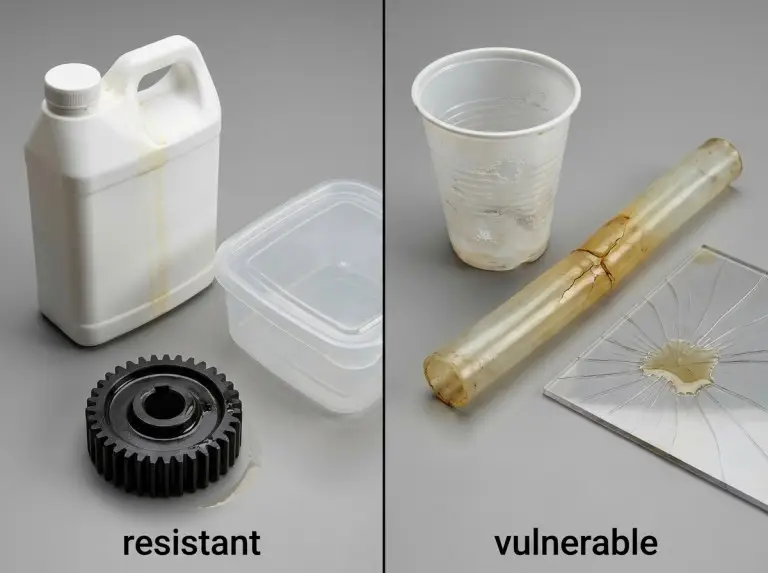
Oil-resistant plastics:
- Polypropylene (PP) and HDPE: Among the most oil-resistant commodity plastics. Their nonpolar, semi-crystalline structures block penetration by most hydrocarbon-based oils, including motor oil, mineral oil, and cooking oils. Standard choice for oil bottles, automotive fluid reservoirs, and industrial containers.
- Nylon (polyamide): Strong resistance to oils and greases. The go-to material for automotive under-hood parts, gear housings, and industrial components in oily environments. The polar amide groups in its backbone do not interact strongly with nonpolar oil molecules.
Oil-vulnerable plastics:
- Polystyrene (PS): One of the most vulnerable common plastics. Its amorphous structure and aromatic polymer chain make it prone to swelling and dissolution from many oils, especially essential oils. Should never hold oil for any extended period.
- Flexible PVC: Can lose its plasticizer through oil extraction, becoming brittle and eventually cracking. Rigid PVC handles most oils reasonably well, but the flexible (plasticized) form fails in prolonged oil contact. Plasticizer migration is a common failure mode in flexible PVC tubing.
- Polycarbonate and ABS: Vulnerable to petroleum-based lubricants and hydraulic fluids.These oils can cause environmental stress cracking even without significant heat.
How to Check Whether a Specific Oil Will Damage a Specific Plastic
Verifying oil-plastic compatibility before committing to a material prevents expensive failures. The process works in steps, each one narrowing the risk.
Start with the polymer’s chemical resistance chart. These are available from resin manufacturers or from published databases that rate polymers against specific chemicals. Look up the specific oil category — not just “oil” in general. Cooking oil, mineral oil, essential oil, and hydraulic oil can produce different ratings for the same polymer. Check that the chart’s test temperature matches your service temperature. A rating at 20°C does not guarantee performance at 60°C.
If the chart shows borderline results, or if no data exists for that oil-polymer pair, request an immersion test from the resin supplier. This test exposes a specimen to the oil at controlled temperature and duration. It then measures changes in weight, dimensions, hardness, and mechanical strength. Immersion testing catches degradation that a visual check would miss.
For heated-oil applications or continuous oil contact over months or years, select a polymer rated for long-term exposure at the expected temperature. Short-term compatibility does not predict long-term behavior. Temperature, UV, and mechanical stress all accelerate degradation alongside oil exposure. If no single polymer meets every requirement, consider glass containers, barrier coatings, or metal alternatives.
Conclusion
Whether oil melts plastic depends on the polymer, the oil, the temperature, and the contact time. Most cooking oils do not melt common food-grade plastics under normal use. Hot frying oil, however, can soften or deform plastics with low thermal thresholds. Essential oils can dissolve vulnerable plastics at room temperature. Motor oils, hydraulic fluids, and synthetic lubricants each present distinct compatibility profiles.
The corrective path is always the same. Identify the polymer. Identify the oil. Confirm the service temperature. Then verify compatibility using resin manufacturer data or immersion testing. Choosing a plastic based on general assumptions about “oil resistance” without checking these variables is the most common cause of material failure. When in doubt, polypropylene and HDPE are the safest commodity starting points for most oil types. Glass remains the most universally oil-resistant packaging option.
FAQ
Can hot cooking oil melt a plastic container?
Yes, if the plastic has a low softening point. Frying temperatures reach 160–230°C, which exceeds the thermal threshold of LDPE and polystyrene. PP and PET containers handle typical cooking oil temperatures better. Sustained contact above their softening range still causes deformation.
Does motor oil damage plastic over time?
Motor oil can cause brittleness, stress cracking, or discoloration in certain plastics over months of contact. Polycarbonate, ABS, and some polyethylene grades are vulnerable. Polypropylene and nylon resist motor oil well, which is why they are standard for automotive fluid containers.
Why do essential oils dissolve some plastic containers?
Essential oils contain concentrated terpenes and aromatic compounds. These act as solvents on polystyrene and some lower-density polyethylenes. The process is chemical dissolution, not thermal melting, and it occurs at room temperature. Glass or polypropylene containers are the standard alternatives.
Which plastics are safest for storing oil?
Polypropylene and HDPE are the most broadly oil-resistant commodity plastics. They work well with cooking oils, motor oils, and mineral oils. For synthetic lubricants or hydraulic fluids, verify compatibility against the specific fluid’s data sheet. Additive packages in these oils affect plastics differently than base oils alone.
Is boiling water or hot oil more likely to melt plastic?
Hot oil causes far more thermal damage. Water boils at 100°C, which is below the softening point of most plastics. Cooking oils reach 160–230°C, exceeding the thermal threshold of LDPE, PS, and PP. The oil does not chemically melt the plastic. It simply transfers heat at temperatures water cannot reach.
Can plastic containers be reused after contact with oil?
It depends on whether the oil caused permanent changes. A PP or HDPE container that held cooking oil and shows no warping, hazing, or cracking can generally be cleaned and reused. If the plastic shows cloudiness, tackiness, distortion, or cracking, the polymer structure has been compromised. Replace it.