

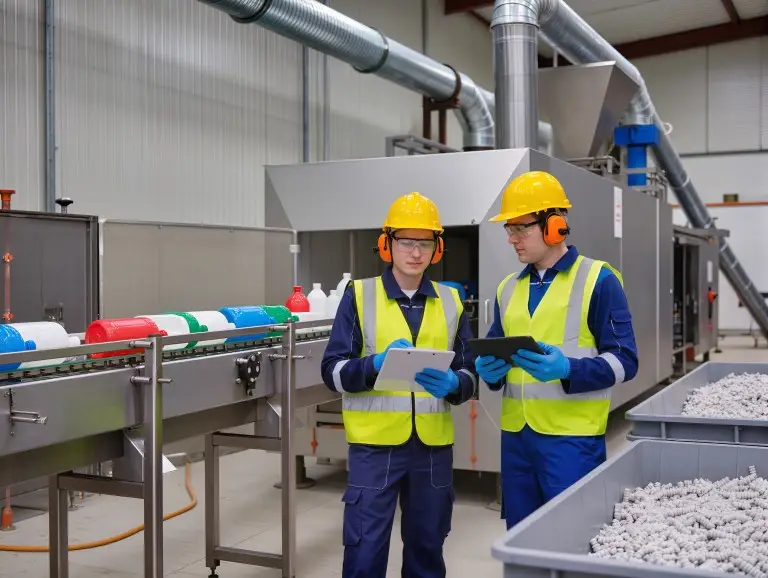
Choosing the right method and machine for crushing plastic is key. The best choice depends on the material’s form, the target output size, and the next process in line. The approach changes whether you are recycling consumer bottles, recovering factory scrap, or processing mixed industrial waste. This guide covers manual and mechanical methods, the main types of crusher machines, and the variables that control results. It also highlights common mistakes we see when facilities set up a crushing operation.
This article focuses on industrial and semi-industrial plastic crushing. It does not cover chemical recycling or other processes that use different equipment.
Why Crushing Plastic Is a Required Step
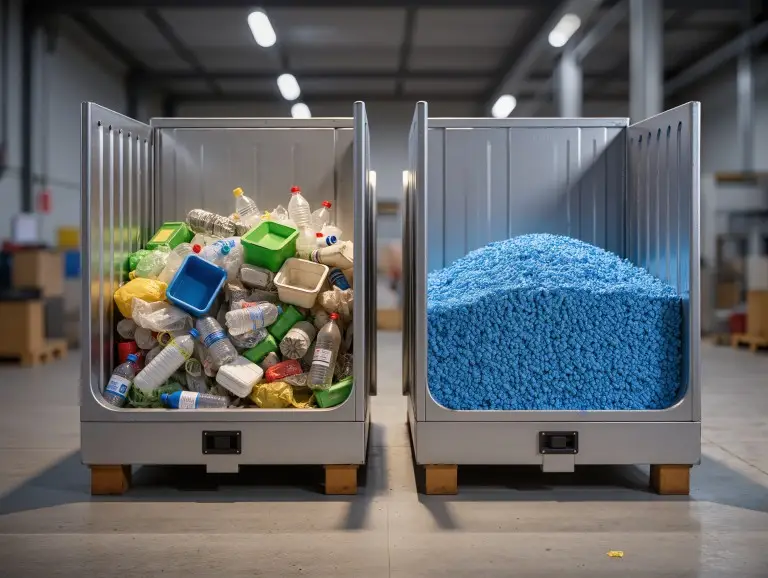
Volume reduction is the first mechanical step in nearly every plastic recycling line. Skipping or misjudging it affects every process that follows. Raw plastic waste takes up too much space for downstream equipment to handle well. Crushing reduces that volume. It creates a feedstock with a more predictable size for washing, drying, and pelletizing.
Beyond saving space, crushing improves material quality. Uniform flake or granule size makes washing more efficient. Smaller, consistently sized pieces release contaminants more easily. In extrusion and pelletizing, size consistency prevents uneven melting, which can cause defects in the final product.
We work with facilities that process PVC, PE, PET, PP, and mixed plastics. In our experience, the decisions made at the crushing stage set the quality ceiling for everything else. A mismatch here cannot be corrected later without extra processing costs.
Misconceptions About Plastic Crushing
The most common error is picking a machine based on throughput capacity alone. A crusher rated for 500 kg/hr on rigid HDPE containers may perform differently on the same weight of flexible PE film. The cutting mechanism, rotor speed, and screen react differently to material stiffness and bulk density.
A second frequent assumption is that harder blades always last longer. In reality, if the feed contains metal, sand, or glass, very hard blades can chip instead of wearing down slowly. Chipping causes downtime and inconsistent output. This costs more than the shorter service intervals of a tougher, more impact-resistant blade. Matching blade hardness to the actual contamination level gives more stable results.
A third misconception involves screen mesh size. Operators sometimes install the smallest screen to get the finest output, assuming smaller is always better. But small screen openings reduce throughput and create more heat. This can soften some plastics, causing smearing instead of clean cuts. The right screen size depends on what the next processing step needs.
Plastic Crushing Methods
Plastic crushing methods range from manual compression to high-speed industrial machines. Selecting the wrong method for the volume and material creates bottlenecks that affect the entire process.
For small amounts of consumer bottles, manual crushing by hand or with a simple lever works fine. Removing the cap, compressing the bottle, and replacing the cap keeps it compact for recycling bins. This works for households but not for commercial volumes.
Mechanical crushing with powered equipment handles industrial needs. The three main types are crushers (or granulators), shredders, and combined systems. A crusher uses high-speed rotating blades against stationary knives to shear plastic into uniform flakes, usually 8 mm to 30 mm. A shredder operates at low speed with high torque, tearing bulky items into strips as a first step. Confusing their roles leads to problems.
Our plastic crusher machines operate in the high-speed shearing range. They produce consistent flakes suitable for washing, conveying, or re-extrusion. For oversized items like drums or baled bottles, we recommend a pre-shredding stage before our crusher.
Types of Plastic Crusher Machines
Your crusher choice should match the incoming material and required output. A mismatch between plastic grinding machine type and feed form is the most common reason for poor performance.
Claw-Type Crushers
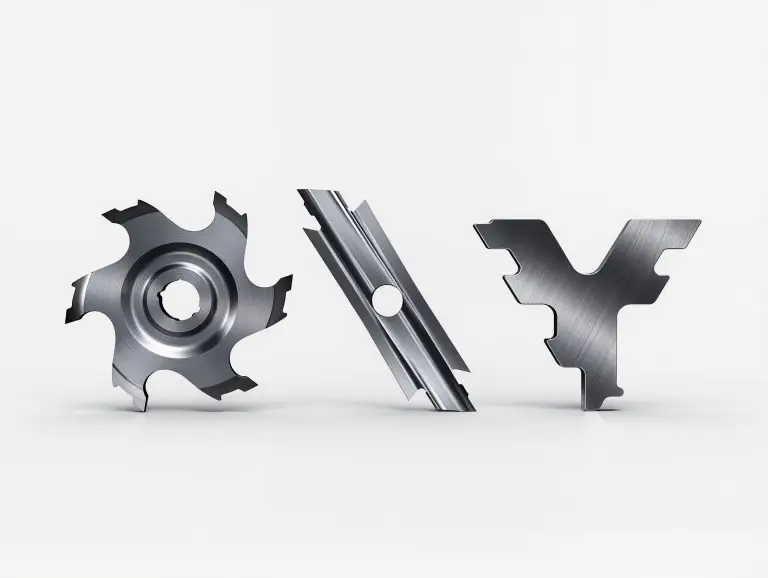
Claw-type crushers use hooked blades that grab and tear material. This design works well on thick, rigid parts like solid plastic blocks and heavy pipe sections. The aggressive blades handle dense material but can cause uneven output with thin-wall containers or film.
Flat-Blade Crushers
Flat-blade crushers use wide, straight cutting edges in a scissor-like pattern. This design produces cleaner, more uniform flakes from thin-walled products like PET bottles and HDPE containers. Flat blades are standard for most bottle-to-flake recycling lines.
V-Blade Crushers
V-blade (or chevron) crushers arrange blades in a pattern that pulls material inward. This setup handles flexible materials like PE film and PP woven bags without the wrapping and jamming that can happen with flat blades.
Silent or Low-Speed Crushers
Silent crushers operate at a reduced rotor speed with soundproofed enclosures. They produce noise levels around 85 dB. These machines are good for use inside production halls, right beside molding machines for immediate regrind and reuse.
We make crushers in these categories with motors from 5 HP to 100 HP. This corresponds to throughputs from about 300 kg/hr to 2,000 kg/hr. Machine selection should always start with analyzing the feed material, not just a throughput target.
Further Reading: Which Type of Crusher is Best?
Key Variables for Crushing Performance
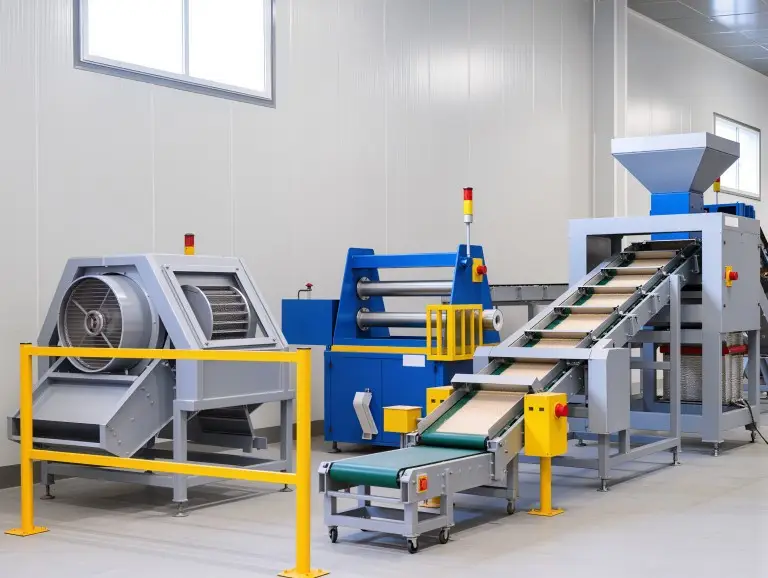
Crushing output and efficiency depend on several connected variables. Adjusting one without checking its effect on the others can create new problems.
Material Type and Form
Rigid plastics like ABS and PVC need higher cutting force. They benefit from wear-resistant blade steels like D2 or SKD-11. Soft polymers like PE and PP need sharp edges and precise blade gap settings for a clean shear. Elastic materials need a progressive cutting action to avoid stretching instead of cutting.
Blade Gap
The blade gap is the clearance between rotating and fixed knives. It directly controls cut quality. A tighter gap gives a cleaner cut but uses more energy and wears blades faster. A wider gap is less precise and can create irregular pieces. The right setting depends on the material’s stiffness and thickness.
Screen Mesh Size
The screen mesh size determines the maximum size of the output particles. Smaller openings produce finer output but reduce throughput. This is because material recirculates in the chamber until it fits through. This recirculation raises the temperature, which can degrade some polymers.
Rotor Speed
Rotor speed interacts with all other variables. Higher speeds increase throughput on rigid materials but create more heat and fine particles with soft plastics. Lower speeds reduce noise and heat but may not provide enough cutting power for thick-walled parts.
Feed Rate
Feed rate and presentation also matter. Overfeeding can cause motor overload and blade damage. Underfeeding the crusher reduces efficiency. Automated feeding systems with metal detectors provide the most stable input. We recommend them for any continuous operation.
Common Mistakes in Plastic Crushing
Most plastic crushing failures come from four recurring mistakes. These involve material-machine mismatch, poor contamination management, late blade maintenance, and poor output alignment.
Feeding contaminated material without pre-screening is a frequent and costly error. Metal fragments can chip blades and damage screens, causing unplanned shutdowns. Sand and grit speed up wear. Installing a magnetic separator or metal detector before the crusher is a simple preventive step.
Neglecting blade maintenance until output quality drops is another common pattern. Dull blades do not stop cutting; they tear instead of shearing. This creates more fine particles, raises chamber temperature, and strains the motor. An inspection schedule based on operating hours and material type is better than waiting for problems to appear.
Ignoring airflow and dust management causes other problems. Crushed plastic generates dust. Without proper extraction, dust settles on bearings, motors, and electrical parts. This can lead to overheating and equipment failure. Our crushers have dust extraction connections, but the site needs to have a ducting and filtration system.
Running the crusher without checking if the downstream process can handle the output creates bottlenecks. If a wash line needs 12 mm flakes and the crusher makes 20 mm pieces, the whole line underperforms. We confirm output needs with the process owner during project planning.
Conclusion
Effective plastic crushing depends on three things. First, accurately characterize the feed material. Second, select the machine and blade type to match that material. Third, verify the output specification against downstream needs. These steps are connected, and skipping any of them creates problems later.
In our work, the smoothest projects are those where the feed stream was sampled and understood before equipment was chosen. Teams that assume a polymer name is enough information miss the details that drive performance, like form and contamination.
If you are setting up or upgrading a plastic crushing operation, define your feed material profile first. Include its form, polymer type, thickness, and contamination level. Also, note your throughput target and downstream output needs. Share these details with our team. We can confirm if a standard machine will work or if you need adjustments.
FAQ
What crusher works for mixed plastic waste?
A claw-type or heavy-duty flat-blade crusher can handle mixed rigid plastics. But performance depends on the range of materials in the mix. Streams with both rigid containers and flexible film usually need a two-stage process: shredding before crushing.
How does blade type affect crushed plastic?
Blade geometry determines if the machine shears, tears, or smears the plastic. Flat blades make uniform flakes from thin-walled rigid plastics. V-blades reduce jamming with flexible films. Claw blades grab thick solids well. The wrong blade creates irregular output.
How often should crusher blades be changed?
Service intervals depend on the material, contamination, blade steel, and operating hours. Clean PET bottles may allow hundreds of hours between sharpenings. Waste with sand contamination can shorten that time a lot. It is best to set an inspection schedule based on performance.
Can a crusher handle PVC without changes?
Most standard crushers can process PVC. However, it creates more heat and can release hydrogen chloride gas if it gets too hot. Good ventilation, proper rotor speed, and corrosion-resistant blades are important.
What screen mesh size should I use?
Screen size should match the needs of the next process. Washing lines often use 10 mm to 16 mm flakes. Extruders might accept larger pieces. Using the smallest screen without checking downstream needs can reduce throughput and increase heat.
Is it necessary to sort plastic before crushing?
Sorting before crushing improves both output quality and machine life. It is harder to separate mixed polymers after they are crushed. Removing contaminants like metal also protects the crusher’s blades and screens from damage.