
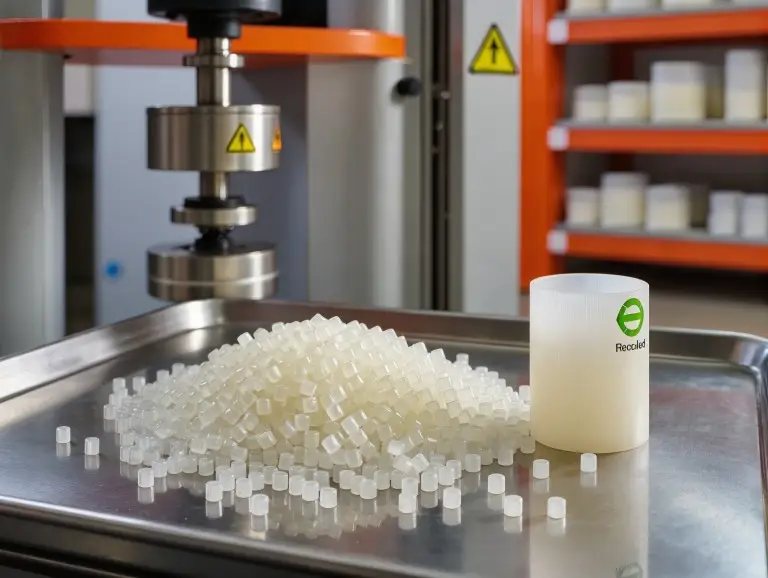
Polypropylene (PP) is one of the most widely used plastics in everyday products and industrial manufacturing. You’ll find it in food containers, bottle caps, automotive trims, medical disposables, and nonwoven fabrics. The reason is simple: PP combines low weight, chemical resistance, durability, and scalable processing. In this article, I’ll explain what PP plastic is used for and how its properties and common grades align with real-world applications.
What Is PP Plastic?
PP plastic is a semi-crystalline polymer made from propylene monomers. It’s considered a “workhorse” plastic because it can be molded, extruded, and converted into fibers. In recycling and manufacturing, PP is popular due to its stability, ease of processing, and wide availability.
Key Properties That Drive PP Applications
PP is chosen when a product needs a balanced set of properties rather than one extreme feature.
- Chemical resistance: Works well with many acids, bases, and detergents.
- Low density: Produces lightweight parts with decent stiffness.
- Fatigue resistance: Handles repeated flexing, such as in “living hinges.”
- Electrical insulation: Ideal for housings and insulated components.
- Moisture resistance: Low water absorption makes it suitable for wet environments.
- Heat capability: Softening and long-term limits depend on the grade and load.
- Easy processing: Commonly used in injection molding, extrusion, thermoforming, and fiber spinning.
Note: PP is not naturally UV-resistant. Outdoor parts often require stabilizers, pigments, or coatings.
Main Forms/Grades of PP and Their Typical Uses
Different PP grades behave uniquely in products. Choosing the right grade prevents cracking, warping, or premature aging.
- PP Homopolymer :This is the “stiffer” PP family, offering good strength and processability. It’s widely used for caps, containers, thin-wall items, and injection-molded components. It performs well in dry, indoor environments.
- PP Copolymer (Random/Impact) : Copolymers add toughness, especially at lower temperatures. This makes them common in automotive interior trims, crates, bins, and impact-prone parts. If a product is likely to be dropped, bumped, or flexed, this is often the safer choice.
- PP Fiber/Nonwoven : PP can be spun into fibers and turned into woven or nonwoven sheets. Typical products include ropes, reusable bags, carpets, and hygiene materials like spunbond and meltblown layers. Its low density, water resistance, and scalable production are key advantages.
- PP Film/Sheet : PP film and sheet are used in labels, packaging films, BOPP applications, folders, and thermoformed trays. These grades focus on clarity, stiffness-to-weight, and stable performance. Additives and orientation methods can further enhance film properties.
What Is PP Plastic Used For?
Here are the most common uses of PP, along with why it fits each application:
- Packaging: PP is used for bottle caps, hinged lids, yogurt cups, food containers, and storage bins. It resists food acids, oils, and cleaning chemicals. It also supports high-speed molding, keeping costs low.
- Automotive : PP is found in bumpers (often in blends), interior trims, door panels, consoles, and battery housings. Its low density helps reduce vehicle weight. Impact copolymer grades ensure parts can withstand knocks and vibrations.
- Medical & Lab : PP is common in syringes, specimen containers, labware, and medical packaging. It tolerates many sterilization and cleaning processes. Its consistency supports clean, reliable injection molding.
- Electrical :PP is used in electrical housings, covers, and insulating parts due to its dielectric properties. It’s also a film material in capacitors. Additives may be needed to meet flame ratings or compliance standards.
- Consumer & Industrial Goods: PP is used in buckets, chairs, tool cases, luggage shells, reusable crates, and pallets. It offers a strong balance of cost and durability. Copolymer grades are preferred for impact resistance.
When PP Is a Good (or Bad) Choice
Use this as a quick guide:
PP is a good choice when you need:
- Chemical resistance to detergents, cleaners, and many solvents.
- Lightweight parts with decent stiffness.
- Repeated flexing (e.g., hinges, caps, latches).
- Low water absorption and easy cleaning.
- High-volume production with stable processing.
PP may not be ideal when you need:
- Strong UV and weather resistance without stabilizers.
- High structural stiffness under load at elevated temperatures.
- Reliable bonding with glues or paints without surface treatment.
- Strong performance at very low temperatures without toughened grades.
- Ultra-low warpage for tight-tolerance assemblies without design controls.
Processing Tips to Prevent Failures
- Design for PP shrinkage and warpage, especially in large flat parts.
- Choose impact grades if drop resistance is important.
- Use UV-stabilized PP for outdoor products.
- Plan for surface treatment if printing, painting, or gluing is required.
Conclusion
PP plastic is widely used in packaging, automotive, medical, electrical, and consumer goods because it balances performance and cost better than many alternatives. The key is not just knowing “where PP is used,” but also selecting the right PP grade for the job. By matching application needs to PP’s strengths—chemical resistance, low density, and fatigue performance—you can create stable products with fewer failures. For UV exposure, tight tolerances, bonding, or harsh temperatures, choosing the right grade and design approach is critical.
Additionally, sustainable practices are gaining importance in the plastics industry. IPG as a leading supplier of plastic recycling equipment, play a vital role in enabling efficient recycling of PP materials. Leveraging such solutions can help manufacturers reduce waste and promote a circular economy while maintaining product performance.
FAQ
Is PP plastic food-safe?
Many PP grades are used in food contact applications. Safety depends on the resin grade, additives, and local compliance requirements.
Can PP go in the microwave or dishwasher?
PP often performs better than many plastics with warm food. Performance depends on thickness, load, and temperature cycles.
What recycling code is PP?
PP is typically resin identification code #5. Local recycling acceptance varies by region and product form.
Why do some PP parts crack in cold weather?
Homopolymer PP can be less impact-tough at low temperatures. Impact copolymer grades usually reduce this risk.
Is PP naturally UV resistant for outdoor use?
Not by default. Outdoor PP usually needs UV stabilizers, pigments, or protective design choices.
Why is PP hard to glue or paint?
PP has low surface energy, so many adhesives and coatings don’t adhere well. Surface treatment or mechanical fastening is often used.