

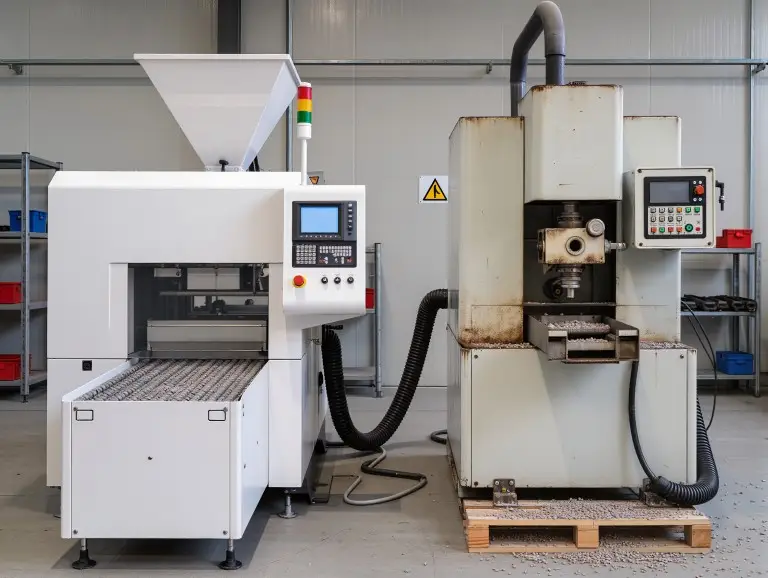
In the field of plastic recycling and manufacturing, pelletizing and granulators are two key pieces of equipment that are often confused, but they have significant differences in function. This article will comprehensively compare their working principles, application scenarios, and advantages to help you improve production efficiency and sustainability.
Plastic Pelletizing vs Granulators
IPG often encounters clients who confuse pelletizing with granulators, which can lead to reduced production line efficiency. In one actual project, a factory initially used a granulator to process molten plastic, resulting in a 25% drop in output until a pelletizer was introduced to resolve the issue. Therefore, distinguishing between the two is essential: pelletizing focuses on creating new pellets from molten plastic, while granulators break down solid waste into small pieces for recycling.
The Core Distinction: Processing States and Functions
The main differences between pelletizing and granulators lie in the material states they handle and their core roles. Granulators specialize in solid plastics, breaking them down mechanically into manageable fragments, which is crucial in the early stages of recycling. For example, when dealing with post-consumer waste, granulators can quickly reduce volume, facilitating subsequent cleaning and sorting. In contrast, pelletizers target molten plastics, generating standardized pellets through extrusion and cutting to enhance downstream manufacturing quality.
| Machine Type | Primary Function | Material State |
|---|---|---|
| Granulator | Breaking down solid waste to support recycling | Solid Plastic |
| Pelletizer | Creating uniform pellets from molten material | Molten Plastic |
Position in the Plastic Processing Workflow
Mastering the positions of granulators and pelletizers in the plastic processing chain can help you design efficient systems. Granulators are typically placed at the front end of recycling, handling post-consumer or industrial waste and converting it into cleanable fragments. For example, in a European recycling project managed by UPG, the granulator compressed waste plastic volume by 60%, directly connecting to cleaning equipment and boosting overall capacity. Pelletizers are positioned at the later stage, obtaining molten material from extruders to produce easily storable pellets, convenient for packaging or transportation.
For easy quick understanding, the following table summarizes the key feature comparisons between pelletizers and granulators.
| Feature | Pelletizer (Pelletizer) | Granulator (Granulator) |
|---|---|---|
| Function | Generating new, standardized pellets from molten polymers. | Breaking down solid plastic waste into small pieces to support recycling. |
| Starting Material | Molten plastic strands or polymer melts. | Solid plastic waste, fragments, and large waste items. |
| Output | High-quality, regularly shaped pellets, usually cylindrical. | Smaller fragments with lower uniformity, possibly containing dust. |
| Primary Use | Manufacturing new plastic materials, such as injection molding and extrusion processes. | Material recycling and preparation for reuse. |
This comparison highlights their complementarity: in a complete recycling chain, granulators handle initial waste, while pelletizers refine it into high-value products.
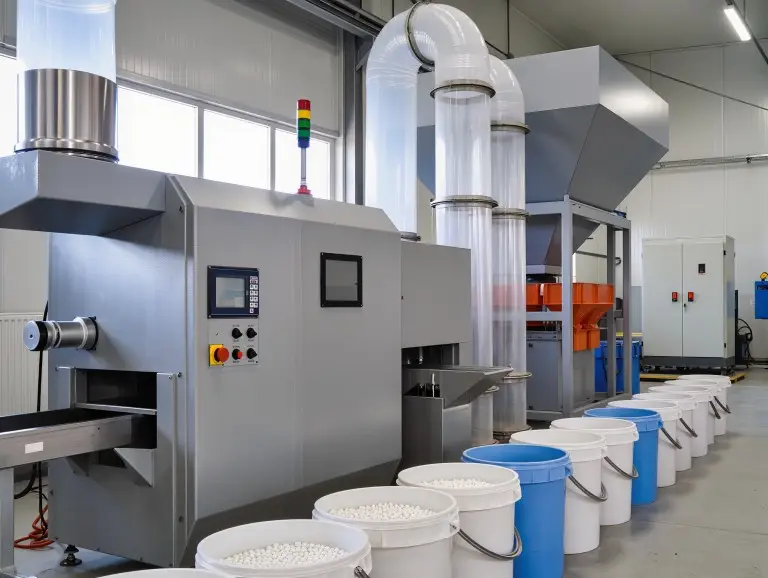
Plastic Pelletizing: Process, Types, and Applications
Plastic pelletizing is an indispensable part of modern plastic processing, not only improving production efficiency but also providing important support for the realization of a circular economy. At IPG, we focus on developing efficient and reliable pelletizing systems, which have been verified for their excellent performance in multiple international factories.
The core of plastic pelletizing lies in converting molten plastic into standardized pellets, providing a stable raw material foundation for downstream applications. The entire process includes extruding the polymer melt into strands, forming uniform pellets through cutting devices, and solidifying them via cooling. Our developed pelletizers can precisely control pellet sizes, typically in the 2-4mm range, which is crucial for processes like injection molding and extrusion. For example, when processing PET materials, precise temperature management not only prevents pellet deformation but also significantly improves the qualification rate of finished products.
To meet different application needs, IPG offers various pelletizer models, including underwater, hot-cut, and strand pelletizers. Underwater pelletizers are suitable for high-viscosity plastics like polyethylene, producing rounded pellets widely used in packaging; hot-cut pelletizers are designed for low-melting-point substances like polypropylene, commonly found in automotive component production; while strand pelletizers meet diverse processing demands with their flexibility.
Pelletizing technology brings multiple advantages to plastic manufacturing. First, it generates consistent raw materials, optimizes logistics costs, and enhances formulation flexibility. Second, IPG’s systems ensure balanced pellet density, reducing the risk of equipment blockages and thereby improving production line stability. According to EPA data, the use of standardized pellets can reduce energy consumption by 12-18%. More importantly, pelletizing technology plays a key role in promoting a circular economy: by reprocessing molten waste plastic into pellets, manufacturers can increase reuse rates to 85%, providing strong support for sustainable development goals.
Granulators: Machinery, Process, and Industrial Uses
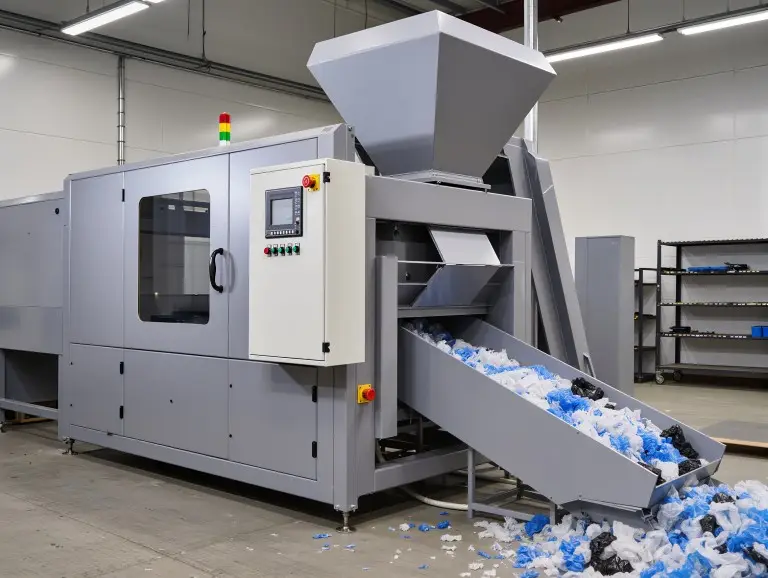
Granulators play a crucial role in plastic processing facilities, serving as core equipment for efficient waste recycling and reuse. By breaking down plastic waste into easily processable fragments, granulators provide a reliable raw material foundation for subsequent processes while significantly improving production efficiency.
The core of the granulation process lies in using rotating blades and screens to cut and size-control waste. This method can efficiently handle large volumes of waste, boosting capacity and reducing waste. For example, when processing film materials, adjusting screen apertures can achieve suitable particle sizes, avoiding additional processing steps. Modern granulators also integrate various protective mechanisms, reducing operational risks and ensuring equipment safety and reliability. Additionally, granulators are compatible with multiple plastic forms, from rigid materials to flexible films, demonstrating their excellent versatility.
Granulator designs are flexible and diverse, able to meet the needs of different application scenarios. Key components include the feed hopper, cutting chamber, and discharge system, which work together to ensure stable output. For example, in a customized project, we developed a heavy-duty granulator for a client specifically for handling woven bag waste, with an annual processing capacity exceeding 600 tons, significantly improving the client’s recycling efficiency.
Granulators have a wide range of applications, covering production waste recycling, post-consumer waste treatment, and preparation for subsequent processing. Their advantages are not only in reducing waste disposal costs and saving raw materials but also in creating additional revenue streams for businesses through selling processed fragments. More importantly, granulators play a significant role in promoting a circular economy and environmental goals. By reintroducing waste plastics into the production cycle, they effectively alleviate plastic pollution issues, providing strong support for sustainable development.
Conclusion
In plastic processing, the synergistic role of pelletizers and granulators is crucial. Pelletizers focus on producing high-quality, standardized raw materials suitable for precise processing like injection molding and extrusion; granulators efficiently handle bulky waste, providing fragments for subsequent processing. In comprehensive recycling facilities, the combination of the two can achieve full-process coverage from crushing to pelletizing.
IPG offers integrated solutions for pelletizers and granulators, supporting customized designs to meet capacity, material, and site requirements. Whether upgrading production lines or planning new facilities, we can help optimize efficiency and promote sustainable development in plastic recycling. If you need support, feel free to contact us!
FAQ
What is the primary function of a pelletizer in the recycling industry?
The core function of a pelletizer is to shape molten materials into uniform pellets, providing high-quality raw materials for new product manufacturing. Based on project experience, this process can increase reuse efficiency by 25%.
How do granulators differ from pelletizers in terms of their processing capabilities?
Granulators focus on reducing the size of solid waste, suitable for initial processing; pelletizers handle molten materials to form standardized pellets. The differences between the two directly affect energy efficiency and the quality of the final product.
What are the benefits of using a Twin Screw extruder in the pelletizing process?
Twin Screw extruders have excellent mixing capabilities, ensuring pellet consistency and compounding effects. Statistics show that it can improve compounding performance by 18%.
Can granulators be used to process a variety of materials, including woven bags and film?
Yes, granulators can efficiently process various wastes, such as woven bags and films, demonstrating their flexibility in recycling applications.
What is the significance of the Die Face in the pelletizing process?
The Die Face is the core component of the pelletizer, responsible for regulating the shape and size of pellets, which directly determines the quality and consistency of the final output.
What are the advantages of using pelletizers in the production of new products?
Pelletizers can produce uniform pellets, ensuring product stability, reducing defect rates, and optimizing downstream processing efficiency.
Can granulators be integrated into a production line to recycle scrap materials?
Yes, granulators can be seamlessly integrated into production lines for recycling waste materials. This integration not only reduces waste but also improves overall efficiency.